Rooftop additions, conversions and extensions
AHAM Vastgoed is always on the lookout for opportunities to add residential units to existing premises. Obviously, these homes must meet strict quality requirements. Over the past decade, AHAM has realised over two hundred such additional homes. Tim van Schijndel, AHAM’s managing director, explains.
‘We have learned several important lessons about rooftop additions. Such projects are costly and time-consuming, and demand a high degree of creativity. But precisely because of this, the resulting homes are magnificent. In other words, the potential is huge, and so are the benefits. Which is very gratifying for us. Each of our rooftop projects usually consists of one additional home, uniquely designed and constructed while the floors below continue to be used as usual. This involves high one-off expenses, for example because you have to operate with additional caution. The work also takes longer, plus you have to acquire the necessary licence. If it’s a leasehold property, the council requires the same return as for newbuild, even though the cost of a rooftop addition is much steeper. So these projects are often financially challenging. But whenever we do manage to complete a project like this, it means we’ve added a fantastic new home at a desirable location.’
Tim has this to say about the state: ‘The state encourages rooftop additions, but existing regulations are often an obstacle. Especially in Amsterdam, where it’s often impossible to add outdoor extensions or, in the case of an existing historical façade, to enlarge windows. Stairwells are also not always conducive to extensions. Tenants usually cooperate if we have to relocate storage spaces, but it all takes time. In addition, every new home has to have its own meter cupboard, but energy grid companies have long waiting lists.
That’s why we always look for creative solutions. We merge stairwells,add rooftop gardens, create patios and skylights, construct mezzanines in living rooms and design façades that can open up entirely to give tenants an outdoor experience even without a balcony. Almost every rooftop addition is unique, which means their design is expensive. You could say we stretch our brains as well as our wallet. But the result is that we have now delivered dozens of homes – and we will
continue to do so – that make us extremely happy and provide our tenants with a unique living experience every day.’
‘The potential is huge, and so are the benefits.’

Bos en Lommer
‘AHAM’s largest complex is located in Amsterdam’s Bos en Lommer district, and it perfectly illustrates the potential of adding homes to existing buildings. Here, we’re converting storage spaces into residential units, extending apartments and adding rooftop terraces. Every year we make this 1930s building a little more attractive and sustainable, thanks to the options of rooftop additions and extensions. This has numerous benefits: Adding extensions to shops on the ground floor makes them more appealing to entrepreneurs. Building a rooftop extension also means installing new roofing: so the building gets a new, sustainable shell.
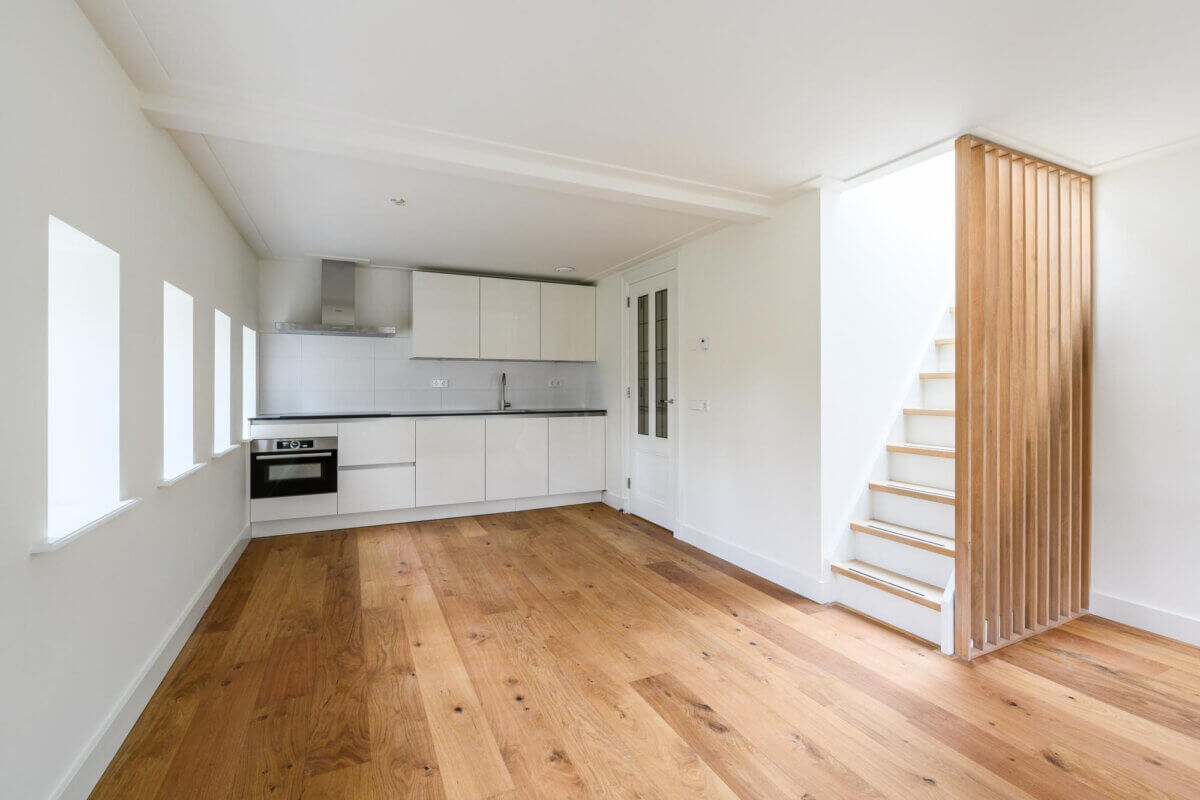
In Bos en Lommer, rooftop additions have enabled us to add types of homes that weren’t previously available there. Tenants don’t object to these homes being on the fourth floor: climbing stairs is worth the effort, because you have a unique residence with an amazing view. Whereas existing apartments have a balcony facing a courtyard garden, the rooftop additions feature terraces with panoramic views of the entire city. We also convert old attic storage rooms into striking residential units, featuring artistic window patterns which are relatively closed, creating an intimate atmosphere indoors. We compensate for the smaller windows with large skylights, rendering these homes bright and cosy at the same time.
Remember, no two rooftop additions are identical. The additional homes are completely different from the existing three hundred, which means tenants have more choice rather than less. Whenever we’re able to add larger apartments, it’s a double benefit for us: they provide accommodation for larger families and enhance the diversity of households. We take all the planning, the time, the costs, obstacles and procedures into the bargain. By now, this attitude has made us specialists, having realised over two hundred additional homes in Amsterdam. We expect to add at least another hundred homes in the coming years. Homes whose creation involves tackling numerous obstacles, but which ultimately offer the lucky tenants a home in the city’s most attractive locations.’